The hardest part of organizing a catered meal is rarely choosing the most popular dish. It is designing a menu that works for different ages, spice tolerances, dietary needs, and serving conditions. That is why people searching for Indian Catering Wilmington DE often need practical planning answers before they need a menu. From workplace lunches to weddings, a thoughtful selection of food and service arrangements can matter more than the number of dishes.
What Should You Decide Before Requesting an Indian Catering Quote?
Start with four facts: guest count, event time, service location, and food restrictions. These determine how many dishes you need, whether a buffet is practical, and how food should be delivered or served. Indian Catering Wilmington DE searches can lead to businesses offering very different levels of service, from pickup trays to staffed events.
Ask whether the proposal includes food only, delivery, warming equipment, utensils, serving staff, and cleanup. The word "catering" alone does not answer those questions. If the venue has limited kitchen space or a short loading window, share those details early.
A clear request saves back-and-forth and makes quotes easier to compare fairly.
How Do Indian Menus Serve Different Tastes?
Indian menus often feature dishes such as butter chicken, paneer gravies, naan, and tandoori appetizers. South Indian traditions include dosa, idli, sambar, tamarind-based preparations, and regional rice dishes. Indian cuisine includes significant variety across different regions.
For a mixed guest list, use regionally varied dishes to give diners meaningful choice. A curry and a South Indian lentil or rice preparation can be complementary, but only if they suit the event’s service format. For example, a freshly made crisp dosa changes texture when held for long periods.
Do not describe a dish as South Indian simply because a restaurant is South Indian-focused. Choose dishes based on their actual ingredients, preparation, and suitability for the event.
Which Menu Balance Works for a Buffet?
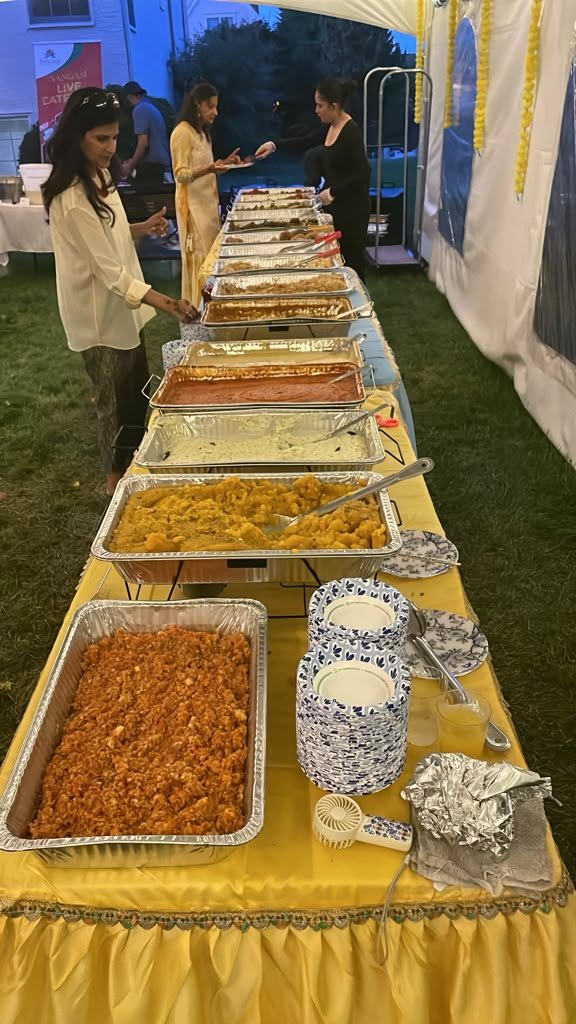
A useful buffet begins with dietary coverage and serving practicality rather than a long list of rich dishes. Offer at least one vegetarian main, a protein or additional vegetable choice, a rice option, and a bread or another suitable starch. Include a mildly seasoned dish for guests who do not enjoy chili heat.
Think about textures. If every entrée is creamy, the meal can feel repetitive. Add a dry vegetable preparation, lentils, or a bright chutney where appropriate. Discuss whether starters should be served separately from the buffet and how long they will hold their intended texture.
Clearly label foods that contain milk, wheat, peanuts, sesame, or other common allergens. This helps guests make informed choices and makes the buffet easier to navigate.
How Much Food and Service Time Should You Plan?
Ask the caterer for portion guidance based on guest count, event length, and whether attendees will have a full meal or light refreshments. A short corporate lunch requires a different plan from a multi-hour reception. Children’s portions and the presence of several courses also affect estimates.
Avoid using a single universal servings-per-tray number without confirmation. Tray dimensions, the dish’s density, and the caterer’s portion guidelines can vary greatly. Plan a realistic service window and discuss how hot items will be held at safe temperatures.
For an outdoor occasion, ask who is responsible for power, weather protection, waste management, and any cooking stations. Clarifying these details in advance can help prevent last-minute problems.
What Makes Wedding, Cultural, and Office Catering Different?
Wedding and reception menus may need several courses, separate vegetarian options, and a defined service schedule. Cultural events may call for specific regional dishes or festival-related dietary rules. Office lunches often prioritize speed, easy portioning, and clear labeling.
A live dosa station, for instance, can be engaging but needs suitable staffing and cooking arrangements; it is not interchangeable with a delivered tray of rice. Ask what a caterer can reliably provide at your venue rather than assuming every menu item can be served in every format.
If you want specific dishes prepared without onion or garlic, or need vegan food, request written confirmation of the available options and preparation methods.
What Catering Services Does Sangam Offer?
Sangam Indian Restaurant in Wilmington, Delaware, offersIndian catering for weddings, receptions, Arangetrams, cultural gatherings, corporate events, community occasions, religious celebrations, birthdays, and private events.
According to its official catering information, Sangam also provides an event space designed for gatherings of 100 or more guests. This allows event organizers to explore venue and catering arrangements together for larger celebrations.
Sangam provides catering services for events across Delaware, Pennsylvania, and Maryland. Its catering information also highlights event catering, buffet arrangements, and catered celebrations.
For Indian Catering Wilmington DE, contact the restaurant with your guest count, event date, location, and service requirements. Confirm menu availability, serving quantities, staffing arrangements, and any customization options directly with the restaurant before finalizing your event.
A Practical Event-Planning Checklist
Before placing a deposit, request an itemized menu, written service details, delivery or setup timing, and a clear cancellation policy. Confirm whether food is prepared at the restaurant or cooked at the venue. Where relevant, ask whether servers, chafing equipment, plates, and beverages are included.
Share the venue contact, event schedule, and a list of allergies or religious dietary requirements. Ask for a named point of contact on the event day. For Indian Catering Wilmington DE, these planning steps create a more reliable guest experience than comparing dish counts alone.
Choose an event menu that is realistic for your venue, not just one that sounds appealing on paper.